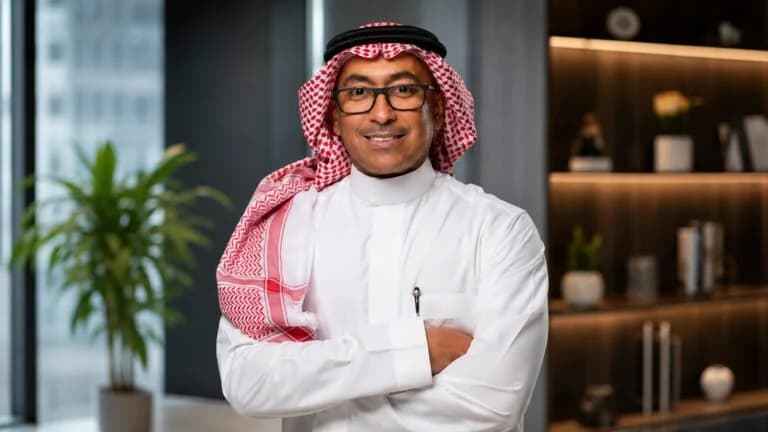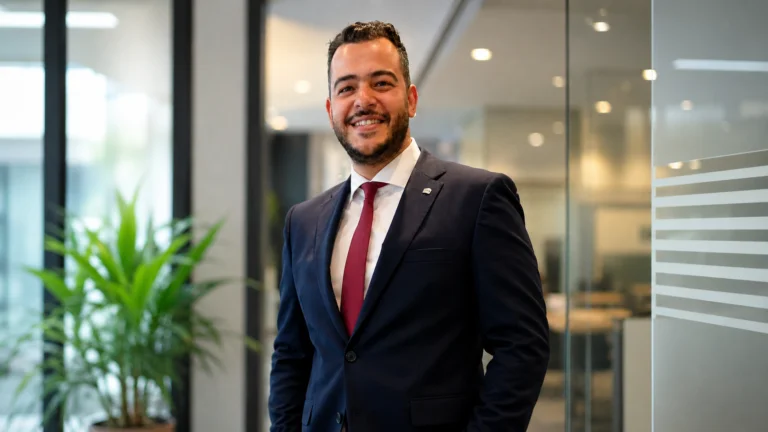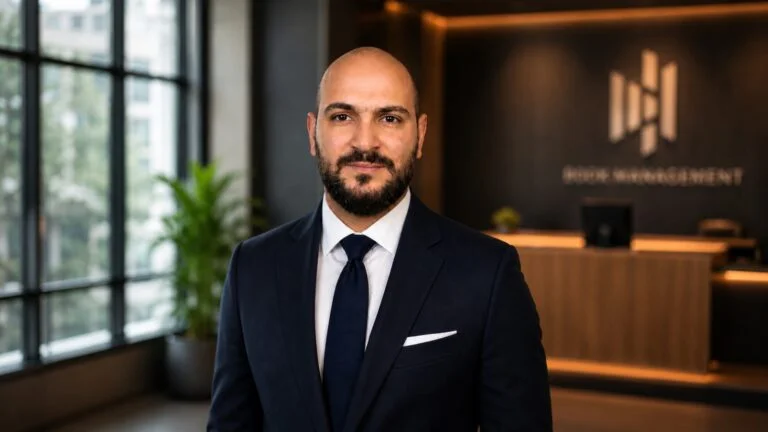
On Natasha Saad Street in Saida, the phone can ring for a villa detail, a site problem, a BIM model, or a young engineer looking for direction. Mohamad Al Ilani built his company in that space between theory and dust. A drawing, in his world, is never just a drawing. It is a promise that concrete, steel, money, and patience will eventually agree with one another.
Learning the slow language of structure
Before The Line had a name, Mohamad was learning the slow language of structure. He studied civil and environmental engineering at Beirut Arab University, then moved into structure and geotechnical work, and later a PhD focused on post-tension and dynamic analysis. But the classroom was only one side of it.
His early years took him through quantity surveying, drafting, steel detailing, and structural design. That kind of route leaves a mark. It teaches an engineer where mistakes hide, in a missed measurement, a weak drawing, a rushed assumption no one wants to question.
Building The Line
In 2018, he chose the harder route and started The Line for Engineering and Contracting. It began as a training center, which says something about him. Some founders begin by chasing clients. Mohamad began by teaching the craft.
Over time, that modest start widened into a consultancy handling structural engineering, architecture, interior design, MEP services, project supervision, BIM, and digital construction tools such as Autodesk Construction Cloud. The company now serves clients across the region, but its center of gravity still feels practical: build carefully, supervise closely, and let the work prove the claim.
The ambition beneath the details
There is a precise sort of ambition in Mohamad’s story. It is not loud. It shows up in the decision to keep studying while building a firm, to move from manual design into 3D modeling, to treat sustainability and technology as working habits rather than decoration.
He talks about integrity, technical excellence, and client satisfaction, but the more interesting part is the discipline underneath those words. The Line grew because it could sit between a client’s idea and the unforgiving reality of a site.
What the work asks of him
What drives him seems less like applause than responsibility. A building carries people long after the engineer has left the room. That knowledge can make a person careful, and care has become part of his method.
Mohamad once described his work as “transforming ideas into well-executed realities.” The phrase fits him best when imagined late in the day, over a marked-up plan, with one more detail checked before anyone calls it done.